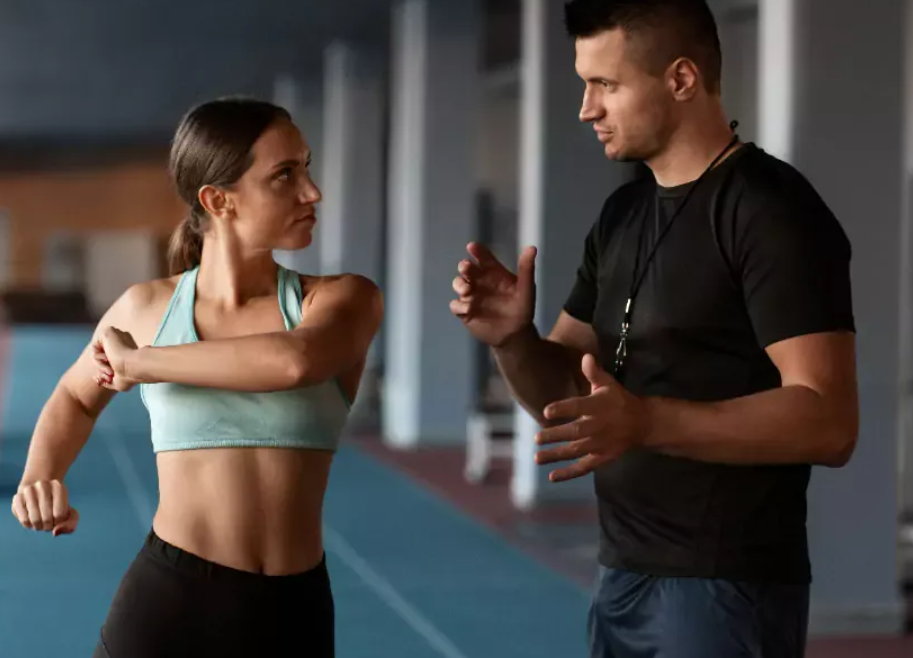
Core advantages of our service
Precision Assessment & Individualized Programming
Every client starts with a structured assessment that evaluates mobility, joint integrity, movement competency, conditioning level and injury history. That data informs a program uniquely layered for immediate safety and long-term adaptation: corrective elements to address weak links, strength cycles tuned for progressive overload, and conditioning phases that preserve gains while enhancing work capacity. Unlike generic templates, this strategy maps microcycles and macrocycles around the client’s real-world constraints—work hours, travel, and recovery capacity—so adherence is higher and meaningful progress happens sooner. Documentation includes clear targets (rep schemes, target loads, and conditional benchmarks) and an accessible exercise library with form cues and video. The result: efficient sessions that prioritize what matters most, reduce harm, and accelerate objective outcomes like strength, endurance, or body composition shifts.
Behavioral Coaching for Sustainable Change
Physiological improvements require behavioral consistency; our coaching includes pragmatic habit design so nutrition and training persist beyond short-term enthusiasm. We break large goals into manageable micro-habits, use accountability structures like check-ins and tracking, and teach clients how to troubleshoot common barriers—time scarcity, travel, stress, or family obligations. By focusing on small wins and clear routines, clients build momentum without relying on willpower alone. Tools include simple food planning templates, time-blocked training windows, and recovery protocols that slot into daily life. Over weeks, these micro-behaviors compound into durable lifestyle changes that make fitness a stable part of identity rather than an occasional sprint.
Injury-aware Progressions & Rehabilitation Mindset
Training around previous injuries or chronic niggles is non-negotiable. Our coaches design progressions that respect tissue healing timelines and emphasize joint-friendly loading patterns that gradually restore capacity without provoking setbacks. Interventions include targeted strengthening for compromised areas, graded exposure to load, and mobility strategies that free restricted movement. We collaborate with allied practitioners when necessary—physiotherapists and medical professionals—so the program remains cohesive and clinically informed. Clients receive clear modification hierarchies for each exercise and a rehabilitation-minded roadmap to move from protected work to full-spectrum performance while tracking functional milestones.
Flexible Delivery: In-person, Remote & Hybrid Models
Coaching adaptability is key for long-term adherence. We offer in-person sessions for hands-on instruction and technique correction, remote programs with detailed video guidance and asynchronous feedback, and hybrid options that combine both. Remote clients receive progress-driven adjustments, session templates for gym or home, and video analysis that flags form issues for real-time correction. Hybrid clients enjoy the coaching intimacy of face-to-face contact with the convenience of remote oversight between sessions—ensuring continuity on busy weeks or travel. This flexibility permits clients to sustain momentum across life changes without sacrificing program fidelity.
Evidence-based Nutrition with Practical Implementation
Nutrition coaching is rooted in scientific principles yet adapted to real life. We prioritize protein distribution to support muscle remodeling, calibrate energy intake to match goals, and emphasize nutrient timing only where it meaningfully impacts outcomes. Clients receive simple meal frameworks—not restrictive rules—plus strategies to navigate social eating, cultural food habits, and budget constraints. We teach how to estimate portions, read labels, and construct balanced meals that align with lifestyle demands. Supplements are recommended sparingly and only when supported by client needs or deficiencies. Tracking is used bi-directionally: to inform adjustments rather than to create perfectionism—helping clients make steady, psychologically sustainable improvements.
Metrics-driven Progress & Transparent Reporting
Progress is measured with a blend of performance and health metrics: strength lifts, conditioning tests, movement quality scores, and body composition markers where appropriate. Each client receives periodic reports summarizing progress, adjustment rationale, and updated targets so training decisions are transparent and data-driven. These reports support accountability, provide motivation through visible improvements, and reduce ambiguity about next steps. When clients pursue aesthetic goals, the focus is on sustainable rates of change to minimize metabolic adaptation and preserve health. For performance goals, periodized benchmarks ensure peaking aligns with desired events or competitive calendars. The reporting system allows both coach and client to reflect, celebrate wins, and calibrate the plan habitually.